
The truck accident claim process in Kentucky involves filing a Personal Injury Protection (PIP) claim, investigating who is responsible, gathering evidence, negotiating with insurance companies, and filing a lawsuit if needed, all within a two-year deadline.
If you’ve been injured in a truck accident, you’re likely dealing with serious injuries, a totaled vehicle, and questions you never expected to ask. Knowing the truck accident claim process in Kentucky helps you understand what comes next and how to protect your right to fair compensation.
Truck accident claims are not the same as regular car accident claims. They involve federal trucking rules, multiple insurance policies, and often more than one responsible party. An experienced truck accident lawyer can help navigate these complexities while protecting your rights throughout the process. The process can take time, but each step is built to help you recover what you have lost.
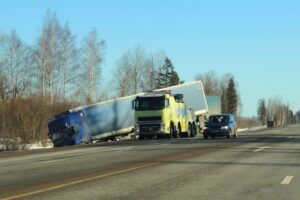 A wreck with an 80,000-pound commercial truck is not the same as a fender bender on Nicholasville Road. The injuries tend to be more serious, the property damage is heavier, and the rules that apply to truck drivers are far more detailed. Federal law governs interstate trucking, while Kentucky law adds its own protections for drivers and passengers.
Truck cases also involve more parties than the average crash. The driver, the trucking company, the cargo loader, the truck manufacturer, and even a maintenance contractor could all share fault. Each party usually has its own insurance company, and each insurer will try to limit what it pays.
That layered structure is why truck accident cases take more investigation. Records from the truck’s electronic logging device, driver qualification files, and inspection reports can all reveal what really happened. The truth often lives in the documents the trucking company would prefer to keep private.
Your health comes before anything else. After a truck crash, getting checked by a doctor is the most important first step, even if you feel okay at the scene. Adrenaline can mask pain from soft tissue damage, internal injuries, or a concussion. Medical records also become a key piece of evidence later in your claim.
Reporting the crash to law enforcement creates an official record. The responding officer will document the scene, take statements, and complete an accident report. That report often becomes a starting point for the investigation that follows.
A few things help protect your claim from the very beginning:
Following these steps helps build a stronger case from day one and gives your personal injury attorney more to work with as the claim moves forward.
Kentucky is a choice no-fault state. That means most drivers carry Personal Injury Protection coverage, also called PIP or basic reparation benefits, which pays for medical bills and lost wages no matter who caused the crash. PIP usually covers up to $10,000 in benefits, and you file this claim with your own auto insurance company.
PIP is meant to get money flowing quickly so you can focus on recovery. It does not cover pain and suffering, and it does not stop you from filing a claim against the at-fault driver if your injuries are serious enough.
Under Kentucky’s Motor Vehicle Reparations Act, you can step outside the no-fault system when your injuries meet certain thresholds, such as broken bones, permanent injury, or significant medical expenses.
Filing a PIP claim early matters for another reason. The two-year deadline to sue can run from the date of the crash or the date of your last PIP payment, whichever comes later. Keeping good records of every payment helps protect that timeline if you later decide to sue for injuries in a truck accident.
This is where truck accident cases really differ from passenger vehicle claims. A full investigation looks at far more than just who hit whom. Lawyers dig into the trucking company’s records, the driver’s history, the truck itself, and the cargo it was carrying.
Evidence in a truck case can include:
This evidence does not last forever. Trucking companies are only required to keep certain records for limited periods, and some data can be overwritten in a matter of weeks. Sending a legal preservation letter early forces the company to hold onto records that might otherwise vanish.
A thorough investigation often reveals that more than one party shares the blame. That matters because each responsible party brings additional insurance coverage to the table.
Commercial trucks operating across state lines must follow rules set by the Federal Motor Carrier Safety Administration. These rules cover almost every part of how a trucking company runs, from how long a driver can be behind the wheel to how often a truck must be inspected. Violations of these regulations can contribute to different types of truck accidents, including crashes caused by driver fatigue, poor maintenance, or overloaded cargo. Some of the most important federal rules in truck accident cases include:
When a driver or company breaks one of these rules, that violation can become powerful evidence of negligence. Driver logs, dispatch records, and load receipts often tell the real story behind a crash on the Bluegrass Parkway or anywhere else in the Commonwealth.
Lawyers use these federal standards to hold trucking companies accountable when their choices put others in danger. The rules exist to protect everyone on the road, and ignoring them has consequences.
Once liability becomes clearer, the next step is figuring out what your case is actually worth. This is more involved than just adding up your medical bills. Truck crashes often cause injuries that affect a person for years, sometimes for life, and understanding the causes of truck accidents may help establish liability and strengthen your claim.
Damages in a Kentucky truck accident claim can include:
Putting a fair number on these losses takes careful work. Medical experts, vocational specialists, and economists may all play a role in showing what your future will look like because of the crash.
Insurance companies often push for fast, low settlements before the full picture is clear, which is why patience tends to pay off.
 Most truck accident claims settle without ever going to trial. After the investigation and damage calculation, your attorney sends a demand letter to the at-fault parties’ insurance companies. The letter lays out the facts, the evidence, the injuries, and the amount being requested.
Insurance adjusters then respond with their own offers, and negotiations begin. This back-and-forth can take weeks or months. Trucking insurance carriers tend to fight harder than typical auto insurers because the policy limits are usually much higher, often $750,000 to $1 million or more for a single truck.
A strong negotiating position depends on solid evidence and a willingness to take the case to court if needed. Insurance companies pay attention when they see that a law firm is fully prepared to file a personal injury lawsuit and present detailed proof of special damages in a personal injury lawsuit before a Fayette County jury.
When negotiations stall, filing a lawsuit may be the next step. In Kentucky, you generally have two years from the date of the crash or the date of the last PIP payment, whichever is later, to file a truck accident lawsuit under KRS 304.39-230. Missing this deadline almost always means losing the right to recover anything at all. If you are unsure about your options, speaking with Lexington truck accident attorneys can help clarify your next steps.
After a lawsuit is filed, the case enters a phase called discovery. Both sides exchange documents, take depositions, and use experts to dig deeper into what happened. Many cases still settle during discovery once the trucking company sees the strength of the evidence.
If a fair settlement still does not come together, the case moves toward trial. A jury then decides who was at fault and how much should be paid. Even on the day of trial, settlements happen. The point is to be ready for either outcome.
Kentucky follows a pure comparative fault rule under KRS 411.182. This means your compensation can be reduced by the percentage of fault assigned to you, but you can still recover even if you were partly responsible for the crash.
For example, if a jury decides your damages are $200,000 and finds you 20 percent at fault, you would receive $160,000. Even drivers found mostly at fault can still recover something from other responsible parties.
Trucking companies often try to shift blame onto the injured driver to lower what they have to pay, which is one more reason careful evidence gathering matters so much.
Below are answers to questions we hear often from people dealing with a truck crash in the Bluegrass.
Most truck accident claims take several months to a year or more to resolve. Cases with severe injuries, disputed liability, or multiple defendants often take longer because the investigation and negotiation phases require more time. Settling too early can leave money on the table, especially when future medical costs are still unclear.
More than just the driver can be held responsible. The trucking company, the company that loaded the cargo, the maintenance provider, the truck or parts manufacturer, and even a third-party broker can all share fault depending on the facts. Identifying every responsible party often increases the total insurance coverage available for your claim.
Out-of-state drivers and trucking companies can still be held responsible under Kentucky law when the crash happens in the Commonwealth. Federal trucking rules apply across state lines, which often makes interstate cases easier to investigate.
Pain and suffering is not based on a strict formula. Factors that influence the value include the severity of your injuries, the length of your recovery, any permanent limitations, and how the injuries have affected your daily life. Medical records, personal journals, and statements from family and friends can all help document this kind of loss and support the amount an insurance company may pay for pain and suffering.
Surviving family members can file a wrongful death claim in Kentucky. These cases follow different rules under KRS 411.130 and have their own filing deadlines tied to when the estate’s personal representative is appointed. Acting quickly to open the estate and consult an attorney helps protect the family’s right to recover.
 If you or someone you love was hurt in a truck crash in Lexington or anywhere in Kentucky, we are here to help. The truck accident claim process can feel like a lot to carry on your own, especially while you are still healing. You do not have to figure it out alone.
At Maze Law Offices, we offer free, no-pressure consultations and never charge a fee unless we recover compensation for you. Call us today at 859-882-9999 or reach out through our website to share your story. We are ready to listen, answer your questions, and help you take the next step toward the recovery you deserve.