
Truck accident claims in Lexington, Kentucky, can cover a wide range of losses, from medical bills and lost income to pain and suffering and beyond. Speaking with a truck accident lawyer can help you understand the specific damages you can sue for, which depend on the facts of your case, but Kentucky law generally allows injured people to seek compensation for both the financial and personal toll a serious collision takes on their lives.
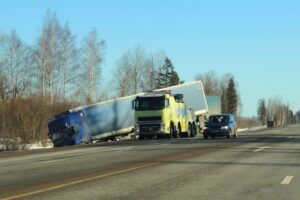 Truck accidents are different from typical car crashes in several important ways. The vehicles involved are much larger, the injuries tend to be more severe, and the legal landscape is more complex because federal regulations govern the trucking industry alongside state law.
Kentucky operates under a choice no-fault auto insurance system, as outlined in KRS 304.39-060. When you register a vehicle in the state, you can either accept the no-fault system or reject it. If you accepted no-fault coverage, your own insurance pays your basic medical expenses and lost wages up to certain limits, regardless of who caused the accident.
However, if your injuries meet specific thresholds, such as medical expenses exceeding $1,000 or if you suffered a permanent injury, broken bone, or disfigurement, you gain the right to step outside the no-fault system and file a claim directly against the party who caused your injuries.
For many truck accidents, this threshold is easily met because collisions with commercial trucks often involving common causes of truck accident frequently result in serious, life-changing injuries. Once you qualify to pursue a claim, the full range of damages Kentucky law recognizes becomes available to you.
One of the largest categories of compensation in any truck accident case involves medical costs. These include expenses you have already paid and those you will likely face in the future. Recoverable medical damages often include:
Truck accidents near busy Lexington corridors like New Circle Road or along Interstate 75 can result in particularly serious injuries simply because of the speed and size of the vehicles involved. Thorough documentation of every medical visit and expense is one of the most important things you can do to support your claim.
A serious truck accident often means time away from work. Kentucky law allows injured people to seek recovery for the income they have already lost because of their injuries as well as future earning potential that has been reduced or eliminated.
Lost wages cover the paychecks you missed while recovering. Reduced earning capacity goes a step further. If your injuries prevent you from returning to the same type of work you did before the accident, or if you can only work part-time or in a lower-paying role, you may be entitled to compensation for that difference over the course of your working life.
Calculating future lost earnings typically requires careful analysis, sometimes with the help of economists or vocational specialists who can project what you would have earned had the accident never happened.
Not all losses come with a receipt. Pain and suffering damages address the physical pain, emotional distress, and overall reduction in quality of life that follow a serious truck accident. Kentucky courts recognize that these non-economic damages are just as real as a medical bill or a missed paycheck, regardless of the types of truck accidents involved.
Pain and suffering can encompass a broad range of experiences:
There is no fixed formula for calculating pain and suffering in Kentucky. Insurance companies and courts look at the severity of injuries, the length of recovery, and the overall impact on your daily life. Because these damages can represent a significant portion of a truck accident claim, having detailed records and even a personal journal describing your day-to-day experience can be very helpful.
Truck collisions frequently cause severe damage to passenger vehicles. You have the right to seek compensation for the cost of repairing your vehicle or, if it was totaled, its fair market value at the time of the crash.
Property damage claims can also cover personal belongings inside the car at the time of the collision, such as electronics, car seats, or other items destroyed in the collision.
Tragically, some truck accidents result in the loss of a loved one. Kentucky’s wrongful death statute, KRS 411.130, allows certain family members to file a claim on behalf of the deceased. Wrongful death damages may include funeral and burial expenses, loss of the deceased person’s future income, loss of companionship, and the pain and suffering the deceased experienced before passing.
Wrongful death cases have their own procedural requirements and timelines, so prompt legal attention is especially important if your family is facing this situation.
One of the reasons truck accident claims are more involved than typical car accident cases is that more than one party may be responsible. Depending on the circumstances, you could potentially bring claims against:
Identifying all potentially responsible parties is one of the most critical parts of building a strong case. Each additional party increases the potential sources of compensation and helps paint a complete picture of what went wrong.
Commercial trucks that travel across state lines are subject to rules set by the Federal Motor Carrier Safety Administration (FMCSA). These regulations cover a wide range of safety requirements, including how many hours a truck driver can be on the road before taking a mandatory rest break, how cargo must be loaded and secured, how often trucks must be inspected and maintained, and the qualifications drivers must meet to operate commercial vehicles.
When a trucking company or driver violates one of these federal rules and that violation contributes to an accident, it can serve as powerful evidence of negligence in your claim. For example, if logbook records or electronic logging device data show that a driver exceeded the maximum hours of service before causing a crash on Interstate 64, that violation directly supports the argument that fatigue played a role.
 Kentucky follows a pure comparative fault system. This means that even if you were partially at fault for the accident, you can still recover compensation, but your award will be reduced by your percentage of responsibility.
For instance, if a jury determines your total damages are $500,000 but finds you were 20% at fault, your recovery would be reduced to $400,000. Insurance companies sometimes try to inflate the injured person’s share of blame as a strategy to pay less.
This is one reason why building a thorough case with strong evidence matters so much.
Once you are home and safe after a truck accident, there are several practical steps that can make a meaningful difference in the strength of your claim:
Taking these steps early can lay a strong foundation for your case and help prevent common mistakes that could reduce what you ultimately recover.
In rare situations, Kentucky courts may award punitive damages. Unlike other types of compensation, punitive damages are not designed to reimburse you for a specific loss. Instead, they are intended to punish particularly reckless or egregious behavior and to discourage similar conduct in the future.
In a truck accident context, punitive damages might come into play if a trucking company knowingly allowed an unqualified driver behind the wheel, encouraged drivers to falsify rest logs, or ignored known safety defects on a vehicle. In these situations, it may be critical to hire a truck accident attorney to pursue the full extent of damages available.
These cases require a higher burden of proof, but when the facts support them, punitive damages can significantly increase the total value of a claim.
Here are some of the most common questions people have about truck accident claims in Kentucky.
Kentucky’s seatbelt law requires occupants to wear seatbelts, but the failure to do so does not automatically bar you from recovering compensation. However, the defense may argue that your injuries would have been less severe had you been buckled in, which could affect the amount you recover.
This is a common defense that trucking companies use to try to avoid liability. Even when a driver is classified as an independent contractor, the trucking company may still bear responsibility depending on the level of control it exercised over the driver’s work. The specific facts of the arrangement matter greatly.
Federal regulations require trucking companies to preserve certain records, including driver logs, inspection reports, and electronic data. If a company destroys evidence, it can face serious legal consequences, and a court may instruct the jury to assume the missing evidence was unfavorable to the company.
Yes. If a truck accident leaves someone incapacitated, a legal guardian or family member may be able to pursue a claim on their behalf. In wrongful death cases, Kentucky law designates a personal representative of the deceased’s estate to file the lawsuit.
 Truck accidents can change everything in an instant, from your health and finances to your ability to enjoy the life you had before the crash. You deserve a legal team that takes your case personally, communicates with you directly, and fights to recover every dollar you are owed.
At Maze Law Offices in Lexington, Kentucky, every case is handled by an attorney, not passed off to a paralegal. Chandler Maze and his team bring firsthand knowledge of courts across Kentucky and a commitment to treating every client like family. Your consultation is free, and you pay nothing unless your case is successful.
Call Maze Law Offices today to discuss your truck accident case and find out what your claim may be worth.